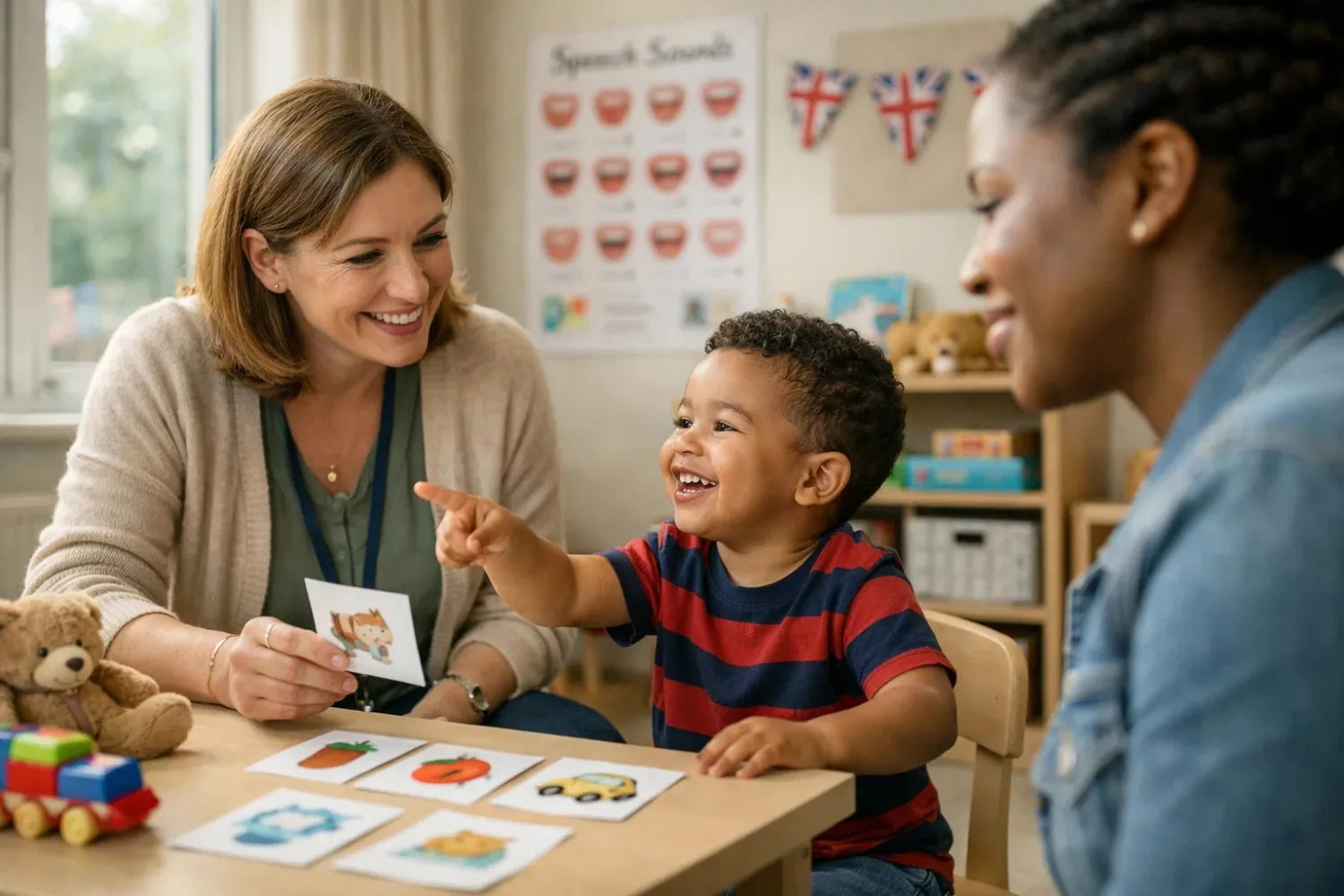
Before saying their first word, children begin learning how to communicate. They point, gesture, and make faces to get a point across, developing speech as they go with family and caregivers. For some children, though, speech or language delays raise concerns for parents. Many families seek early intervention when communication differences become apparent. Parents desire their child to share ideas fluently, make friends confidently, and take part fully at school. Families who are looking for supportive pathways to build early communication skills and lay a foundation for learning success may find speech therapy in Wandsworth helpful. It highlights nurturing communication gradually, patiently, and intentionally via professional support.
Why early support pays off in healthy development
Early communication intervention can help to remove difficulties that may emerge both academically and socially. A child who has difficulty expressing their desires and doesn’t understand what they are told may become easily frustrated. Tantrums, withdrawal, and stubbornness are ways this can show.
The earlier a child can receive help, the better their chances are of developing skills at the most malleable and impressionable age. Skills they will carry with them forever; not only do children develop more quickly when they are young, but the gains they make are permanent.
Some of the recommended enabling practices by professionals that can also benefit a family include passing skills through familiar routines, like story time, mealtime, and play time. Earlier communication support is better, as it will help their vocabulary, pronunciation, and attentiveness, improving confidence and school readiness.
Various types of speech and language delays
Delays in speaking and language manifest in many ways, so that families may be concerned at widely varying ages. A child may say a few words compared to their peers, mumbling and unclear in pronunciation, using simple sentences, and not understanding directions that involve several steps.
Some children develop stammering patterns or have trouble saying a particular sound. Other children may speak clearly and efficiently but seem confused by the social use of communication; for example, they do not take turns easily or cannot read social cues. Recognising these various difficulties at an early age helps motivate families to seek assessment and guidance.
It is essential to understand whether the challenge involves producing speech, processing what is heard, understanding spoken language, or expressing thoughts through speech.
Importance of comprehensive assessments
Professional assessments provide key information about the basis for the issues encountered. When working directly with a child, speech therapists evaluate speech-sound abilities, sentence-level and complexity, vocabulary use, play interactions, and listening abilities. This information is collected through appropriate tools and direct observation within a play-based setting.
The professional assessment for these speech and language therapists also incorporates discussions with parents about daily home practices and concerns. Based on this information, personalised objectives are identified to best reflect participants’ skills.
The lack of a professional assessment may lead to ineffective progress. Tailored programs support individuals by setting realistic goals that align with their individual abilities.
Role of Families in Developing Confidence During Speaking
Involving the family enhances therapy outcomes because children learn to communicate primarily at home. They coach family members on how to model the target sound or words and on how to create natural opportunities for conversation.
In addition, they offer the family a variety of ways to facilitate communication attempts, such as by speaking slowly, repeating communication, using visual supports, or allowing the child time to answer.
As a result, the child will have the confidence to produce the target sound or word because it will be met with positive reinforcement, rather than emphasising mistakes. Family members serve as a resource through which communication with the therapist can occur.
Techniques professionals use during therapy sessions
Therapists rely on playful communication to relieve the pressure and facilitate attempts at communication without fear. Techniques used include modelling correct sounds, expanding the child’s expression, using picture cards, story books, and symbolic play. This systematic repetition is meant to help develop muscle memory for the production patterns.
Visual cues are helpful for children with auditory processing problems. Gesture cues prompt the child to coordinate speech and motor skills. Social and communication goals are targeted through role play and guided-conversation tasks. The therapist will alter techniques depending on the child’s level of progress and frustration. Praise and motivation are key incentives.
Promoting emotional development with speech
Communication is associated with feelings. The child with communication disorders can easily experience embarrassment if others do not understand them. The child might avoid answering questions or even speaking in front of a group. Therapy promotes emotional development by ensuring that mistakes are valid steps towards instruction. Building confidence in communication promotes effectiveness in social interactions and coping mechanisms.
Children are taught how to substitute communication strategies for phrases that are easily accessible, for instance, through gestures, pointing, or drawings, but then begin to switch to verbal communication as their confidence builds. Caregivers can also model responding to emotions to teach children that communication involves people, even when mistakes occur.
Developing the importance of communication development
Communication skills are the foundation for educational, social, and emotional achievements. Beginning intervention for difficulties is important as they could affect literacy if the issues persist in the future. Children need to understand sound patterns to relate them to spelling in reading. Therapy works on and fixes those prerequisites.
Communication enables children to express their feelings and needs, which is an excellent motivator for becoming independent. It has been found that families find therapy benefits extend far beyond clear sounds and vocabulary development into feeling confident, curious, and able to establish meaningful relationships.
In conclusion, the therapy service provides systematic, professional teaching to children on ways to enhance their communication skills. In addition, these services teach parents effective methods to engage with their children. Parents will benefit from continuing speech therapy in London to help their children enhance these skills throughout their lives. Developing their communication ability will allow children to participate at home and at school actively and to establish their identity as individuals.
At London Speech Therapy, we work with families to offer individualised, evidence-based support personalised to each child’s unique needs. If you have any concerns or questions about your child’s speech, language or communication development, our team can offer clear guidance from an initial consultation. The key to securing long-term outcomes is early help, so we’re committed to supporting families with care, expertise and consistency every step of the way.