

Selective Mutism: Practical Strategies for Teachers
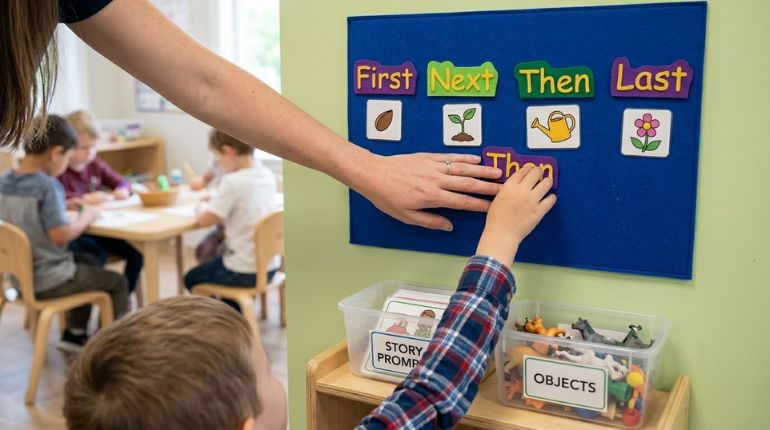
Selective Mutism is an anxiety related condition in which a child is unable to speak in certain situations, despite being able to speak comfortably in others. It is most commonly understood as a communication difficulty driven by anxiety in specific contexts, rather than a choice or refusal to speak.
In school settings, Selective Mutism can sometimes be mistaken for shyness. While shy children may gradually become more comfortable and begin to speak, children with Selective Mutism experience a more consistent pattern of not using spoken language in particular environments, such as the classroom, even when they are able to speak in other settings.
Understanding the “freeze” response
It is important for educators to understand that the lack of speech is not intentional. In anxiety-provoking situations, the child’s nervous system may move into a freeze response, making spoken communication extremely difficult or temporarily inaccessible. This is not stubbornness or non-compliance, but an automatic stress response.
Selective Mutism often becomes more noticeable when children begin nursery or school and are expected to communicate in new social environments. Teachers and school staff are often among the first to recognise these patterns.
Without appropriate support, a child with Selective Mutism may experience increasing anxiety around communication in school. With early understanding and supportive approaches, children can make significant progress in feeling safe enough to communicate in more settings.
Practical Strategies for the Classroom
Supporting a child with Selective Mutism focuses on reducing anxiety, building safety, and gently expanding communication, without pressure.
- Remove pressure to speak:
Avoid directly pressuring, forcing, or repeatedly prompting speech. This includes avoiding rewards or consequences linked specifically to speaking. Pressure can increase anxiety and reduce the child’s sense of safety in communication. - Value all communication:
Recognise and affirm all forms of communication, including pointing, nodding, gestures, writing, AAC, or play-based interaction. These are meaningful communication attempts and should be treated as valid participation. - Create low-demand, positive interactions:
Focus on shared activities that do not require speech. Play-based or parallel activities can help the child feel safe and included while reducing communication pressure. - Follow the child’s lead:
Allow the child to initiate communication in their own time and in ways that feel manageable. If the child begins to use their voice, respond calmly and naturally to what they say, rather than placing emphasis on the act of speaking itself. - Work collaboratively and seek support:
If concerns arise, collaborate with families and the wider school team. Referral to a Speech and Language Therapist or other relevant professionals can support a joined-up approach. Early, supportive intervention can help reduce anxiety around communication and support the child’s participation across school settings.
